
About the School
Welcome to the website of the H2020 ARIEL nuclear data school, entitled “Nuclear data at Research Reactors”.
- Date: 25-29 September 2023
- Venue: Budapest, Hungary
The EURATOM coordination and support project “Accelerator and Research reactor Infrastructures for Education and Learning (ARIEL)” brings together the most modern and state-of-the-art European neutron beam laboratories using the full range of neutron sources from high-energy proton synchrotons to research reactors.
For the continued improvement of the safety of current and future nuclear facilities, accurate and precise nuclear data are required. Producing these nuclear data is a complex process, which relies on neutron facilities and on highly-trained nuclear physicists. Twenty-three partners from 14 European countries work together in the ARIEL project for the education and training of a new generation of young scientists and technical staff.
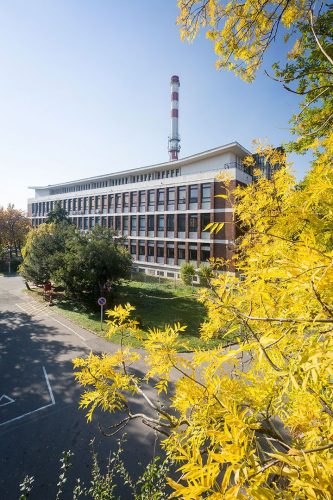
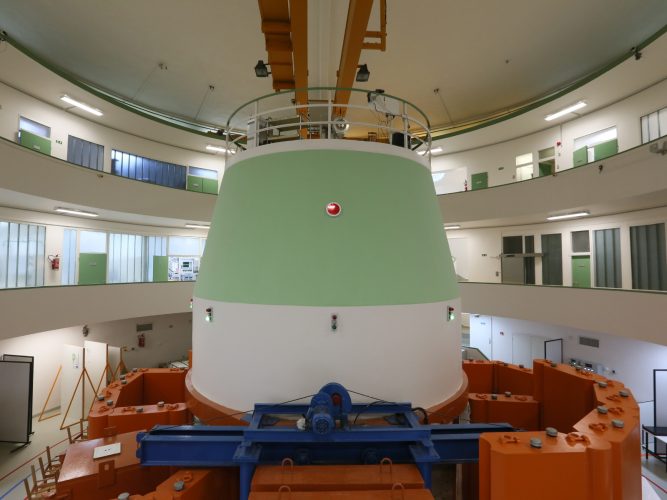
The school is organized by the staff of the Nuclear Analysis and Radiography Department (NAL) at the Centre for Energy Research (EK), Institute for Energy Security and Environmental Safety. The Institute is the home to the scientific staff of the Budapest Neutron Centre (BNC) who operate the instruments installed on the neutron beams of the Budapest Research Reactor (BRR) run by the CER, Institute for Atomic Energy Research. The Centre is part of the research network of the Eötvös Loránd Research Network.
The co-organizer is the Budapest University of Technology and Economics, Institute of Nuclear Techniques (NTI), the operator of a training reactor and a major knowledge center for the Hungarian nuclear higher education.
Theoretical Lectures
Theoretical lectures will be given by experts of the discussed topics. Lectures from CETS 2021 are available here.
The following topics will be discussed:
- Neutron production and neutron sources.
- Introduction to neutron scattering. Basics of neutron physics. Coherent and incoherent scattering. Scattering of neutrons in condensed media. Planning a scattering neutron beam experiment.
- Neutron diffraction: Basics. Why and how to use neutrons for diffraction. Neutron diffraction in materials and life-sciences.
- Small angle neutron scattering (SANS): Basics. What is small angle neutron scattering good for? SANS instrumentation and data analysis. Application examples.
- Neutron reflectivity: Principles of neutron reflection. Neutron reflectometers. Representation and data analysis. Research examples.
- Time-of-flight spectroscopy: Theoretical basics. What happens during a neutron experiment? Instrumentation. Data analysis. Research examples.
- Three-axes spectrometry: Introduction to inelastic neutron scattering. Relation to other methods. Three-axes spectrometer, research examples, formal and technical aspects.
- Polarized neutrons: Basics. Magnetic scattering. Spin manipulation. Instrumentation: neutron-spin-echo.
- Neutron imaging: Introduction. Physics behind neutron radiography. Neutron imaging facilities. Digital imaging. Maths of 3D data reconstruction. Neutron tomography. Visualization in 3D. Applications.
- Elemental analysis with neutrons: Introduction to instrumental neutron activation and prompt-gamma neutron activation analysis. Qualitative and quantitative analysis. Determination of chemical composition. Instrumentation. Methodology and data treatment. Industrial, geological, cultural heritage applications.
- Radiation safety for users of neutron facilities: Introduction. Basic concepts. Risks from radiations. Principles of radiation protection. Radiation protection regulations at the Budapest Research Reactor.
- State-of-the-art European neutron facilities.
Hands-on Training
Due to the space available at the neutron instruments, the number of the participants at the hands-on training is limited to 25. Selection is made on the basis of the submitted abstract and interest in using neutron methods for the applicant’s own research project.
The participants will be divided into groups of a maximum of 5 students in order to facilitate individual involvement in the performance of the experiments. Each group will perform one or two neutron experiments per day and each group will work at 5 different instruments.
Available instruments:
Flash Presentations and Posters
During the first day of the training, a dedicated poster and flash presentation session will be held, where the participants will be asked to present their own research topic (5-minute presentations in English, max. 5 slides). The posters will give further opportunity to discuss their interest in neutron scattering experiments with the local and invited experts.
The required poster size is A0 (841 mm x 1189 mm), portrait.
Registration
The registration fee and the local accommodation of the participants will be covered by the ARIEL project.
Travel expenses cannot be reimbursed.